Purées, baby-led weaning — or both? An honest guide
The internet wants you to pick a side. Your baby just wants lunch. Here's what the evidence actually says about spoon-feeding, self-feeding — and the combined approach most families quietly end up loving.
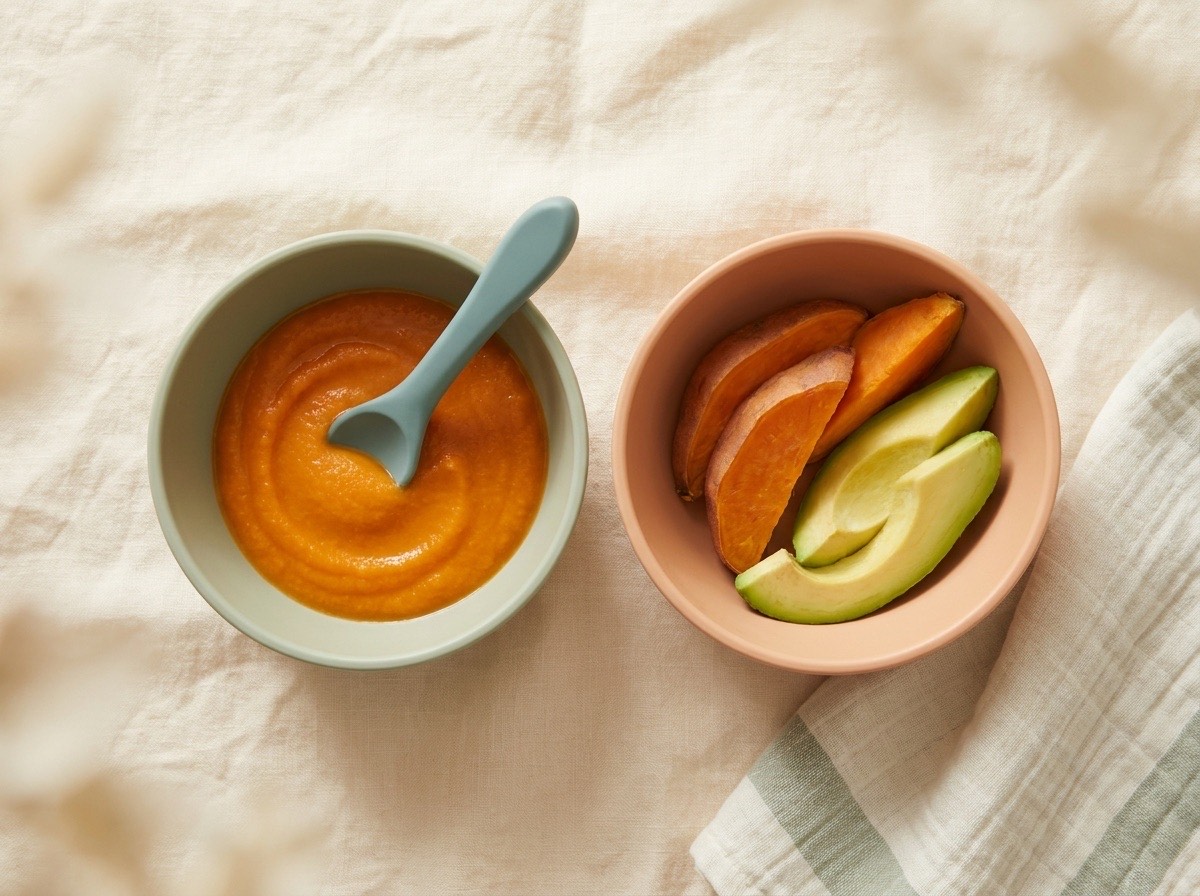
Few parenting topics generate more capital letters online than how food should travel from plate to baby. In one corner: purées, the traditional spoon-fed start. In the other: baby-led weaning (BLW), where babies self-feed graspable pieces from day one. Both camps have passionate advocates. Both produce healthy, happy eaters. Let's lower the temperature and look at what each actually offers.
The case for purées
Spoon-feeding smooth, then mashed, then lumpy food is the classic progression — and it works. Purées let you start the moment readiness arrives even if grasping skills lag a little, make it easy to deliver iron-dense foods like meat and lentils in quantity, and feel manageable when the person feeding is a nervous grandparent. The one real risk is getting stuck: babies kept on smooth textures too long miss the window where lump-tolerance is easiest to build. The fix is simple — keep textures moving. Smooth should be a ramp, not a residence.
The case for baby-led weaning
In BLW, you serve soft, graspable pieces — avocado spears, steamed broccoli "trees," strips of toast — and your baby drives. Fans love the self-regulation (baby decides how much), the motor practice, the early exposure to varied textures, and the glorious simplicity of everyone eating the same meal. The honest caveats: the start is messy, iron intake needs deliberate attention (self-fed babies can gum a lamb chop for ten minutes and swallow a gram of it), and food prep must be careful about shape and softness.
"But isn't BLW dangerous?" — what the research says
This is the fear that keeps parents in the purée aisle, so let's be direct: studies comparing approaches — including the randomized BLISS trial — found no increase in choking among baby-led eaters when foods were prepared age-appropriately. What predicts trouble isn't the philosophy, it's the execution: unsafe shapes, unsupervised eating, reclined positions. Gagging, meanwhile, is more frequent in early BLW — but as we covered in gagging vs. choking, gagging is the learning process, not the danger.
The myth of the confused baby
You may have heard that mixing methods "confuses" babies. There is no evidence for this. Babies happily handle a spoon of yogurt at breakfast and a strip of toast at lunch — what they need is responsive feeding (you respect their hunger and fullness cues) and safe textures, not methodological purity.
Babies don't read feeding philosophies. They read plates, faces and their own bellies.
The combined approach (a.k.a. what most families do)
In practice, the majority of families blend: some spoon-fed iron-rich purées, some self-fed soft pieces, shifting the ratio toward self-feeding as skills grow. A typical day might look like:
- Breakfast: iron-fortified oat porridge on a spoon (some pre-loaded for baby to steer).
- Lunch: soft avocado spears and a strip of omelet, fully self-fed.
- Dinner: the family meal, with baby's portion cut to a safe shape.
Whichever blend you choose, the non-negotiables are the same: baby seated upright, you within arm's reach, shapes and textures matched to their age — and lumps introduced by around 9 months so texture skills keep pace.

This article is for general educational purposes only and is not a substitute for professional medical advice. Discuss your feeding plan with your pediatrician, especially if your baby has developmental, swallowing, or growth concerns.