Is your baby ready for solids? The 5 cues that actually matter
"Around six months" is where readiness begins, not where it ends. Here's what feeding therapists actually look for before the first bite — and the popular "signs" you can safely ignore.
If you ask ten relatives when your baby should start solids, you'll get ten confident answers — and most of them will be about the calendar. The truth is simpler and kinder: the calendar gets a vote, but your baby's body gets the veto. Most babies are developmentally ready around six months, and "around" is doing real work in that sentence. Readiness is a set of skills, not a birthday.
Here are the five cues I walk every family through before the first meal.
1. Sitting upright with steady head control
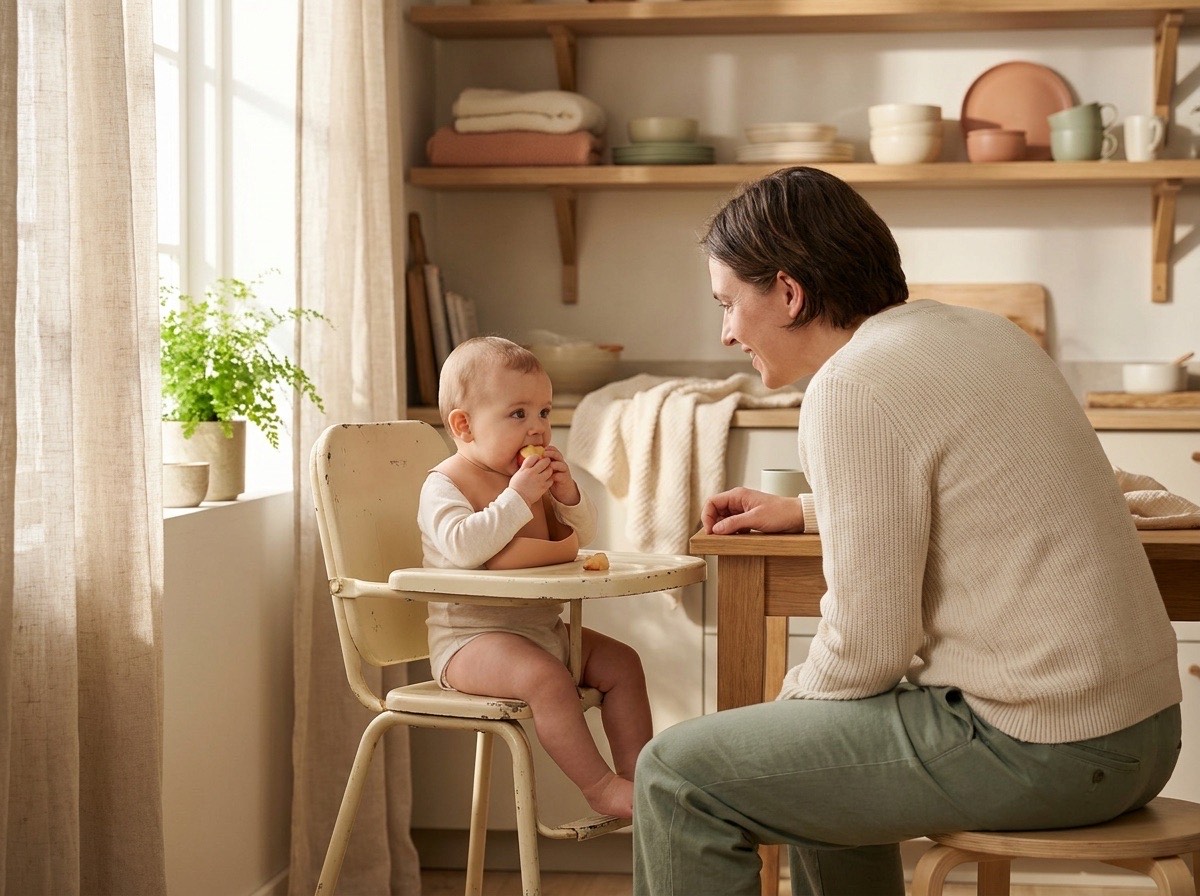
Your baby should sit with little or no support and hold their head steady for the whole "meal" — even if a meal is two minutes long. This isn't about posture for its own sake: a stable trunk and head protect the airway while your baby learns to move food around their mouth. A baby slumping sideways in a pillow is working so hard to stay upright that there's nothing left over for the brand-new job of eating.
2. The tongue-thrust reflex has faded
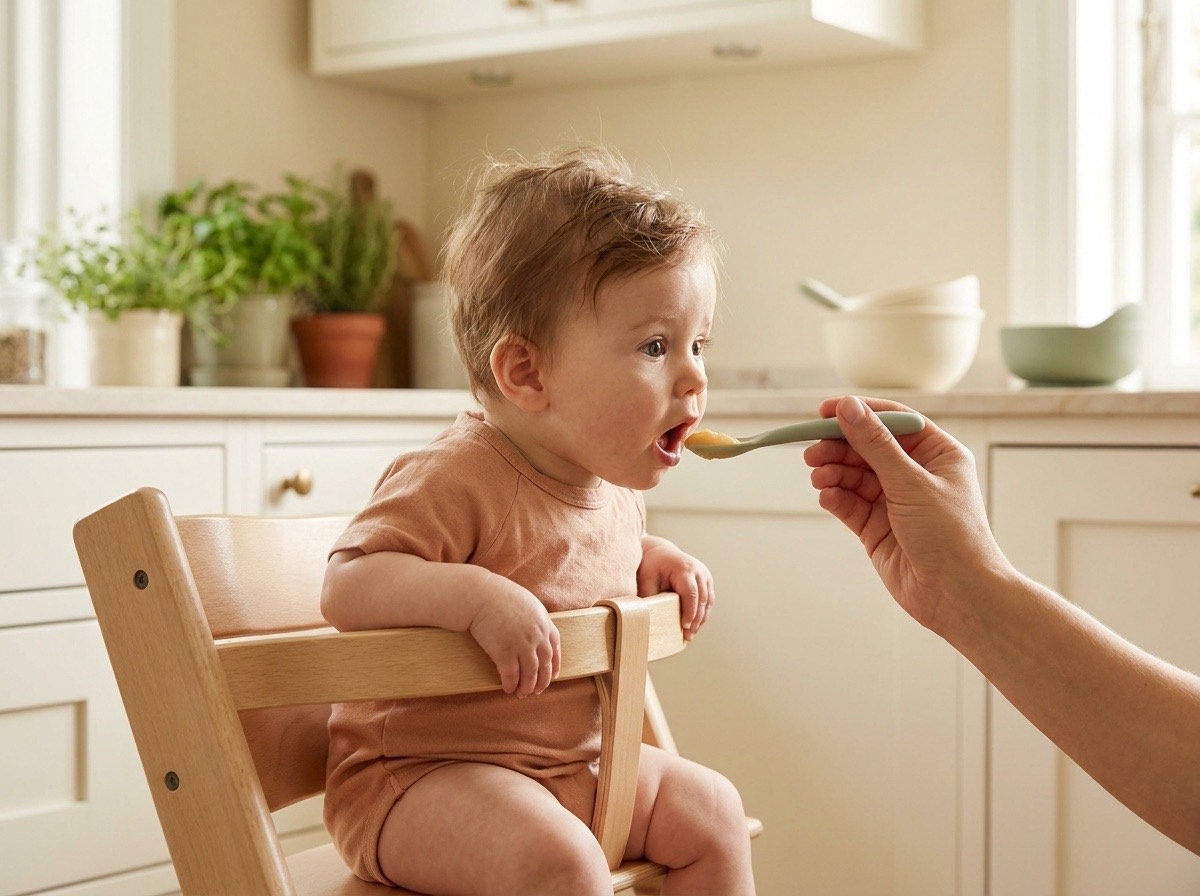
Younger babies reflexively push anything solid out of their mouths with their tongue — a built-in protection against swallowing things they can't handle. If every spoonful comes straight back out on a little tongue conveyor belt, that reflex is still on duty. Wait a week or two and try again; you're not doing anything wrong, the timing just isn't there yet.
3. Reaching, grabbing and bringing things to the mouth
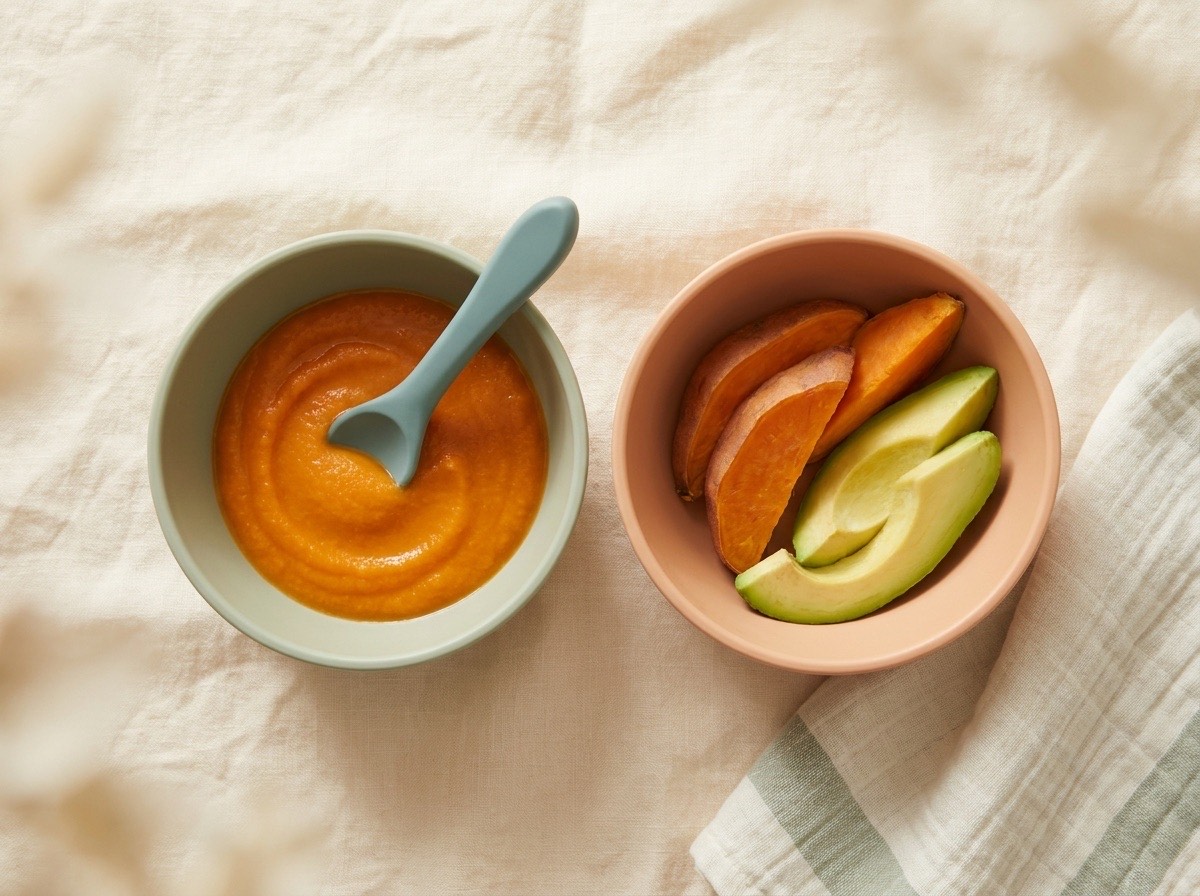
Watch your baby with a toy: do they reach, grab it with intention and steer it into their mouth? That hand-eye-mouth coordination is exactly the motor pattern self-feeding uses. If it's there with a teether, it'll transfer beautifully to a soft spear of avocado.
4. Genuine interest in your food
By readiness age, many babies become shameless meal-watchers — tracking your fork, leaning in, opening their mouth when food comes near, maybe lunging for your toast. Interest alone isn't enough (babies are interested in your phone too), but combined with the physical cues above, it tells you their brain is on board, not just their body.
5. Early munching movements
Offer a (clean) fingertip or watch them with a teething toy: instead of only sucking, ready babies start making up-and-down munching motions and can move things from the front of the mouth toward the back without panic. That's the mechanical foundation for managing purées and soft solids.
"I'll walk through the readiness cues with you piece by piece, so you go into the first meal feeling settled instead of second-guessing."
The "signs" you can safely ignore
- Waking more at night. Sleep regressions track development and growth, not an empty stomach. Starting solids early doesn't reliably improve sleep — the research has looked.
- Chewing on fists. That's classic teething and self-soothing, present months before readiness.
- Hitting a weight milestone. "Double the birth weight" is folklore, not physiology.
- A grandparent's schedule. Many of us were fed cereal at three months. Guidance has moved on for good reasons — their love is timeless, the timeline isn't.
Six months old, but not showing the cues?
That's common, and usually just a matter of weeks. Give your baby supported sitting practice and a seat at the family table so they can watch the show. If your baby was born early, count from the due date, not the birth date — a baby born six weeks early often shows readiness six weeks "late," perfectly on their own schedule. If the cues still aren't coming together by around seven months, bring it up with your pediatrician; that's exactly what check-ups are for.

This article is for general educational purposes only and is not a substitute for professional medical advice, diagnosis, or treatment. Always consult your pediatrician or a qualified healthcare provider about your baby's readiness for solids, especially if your baby was born preterm or has a medical condition.