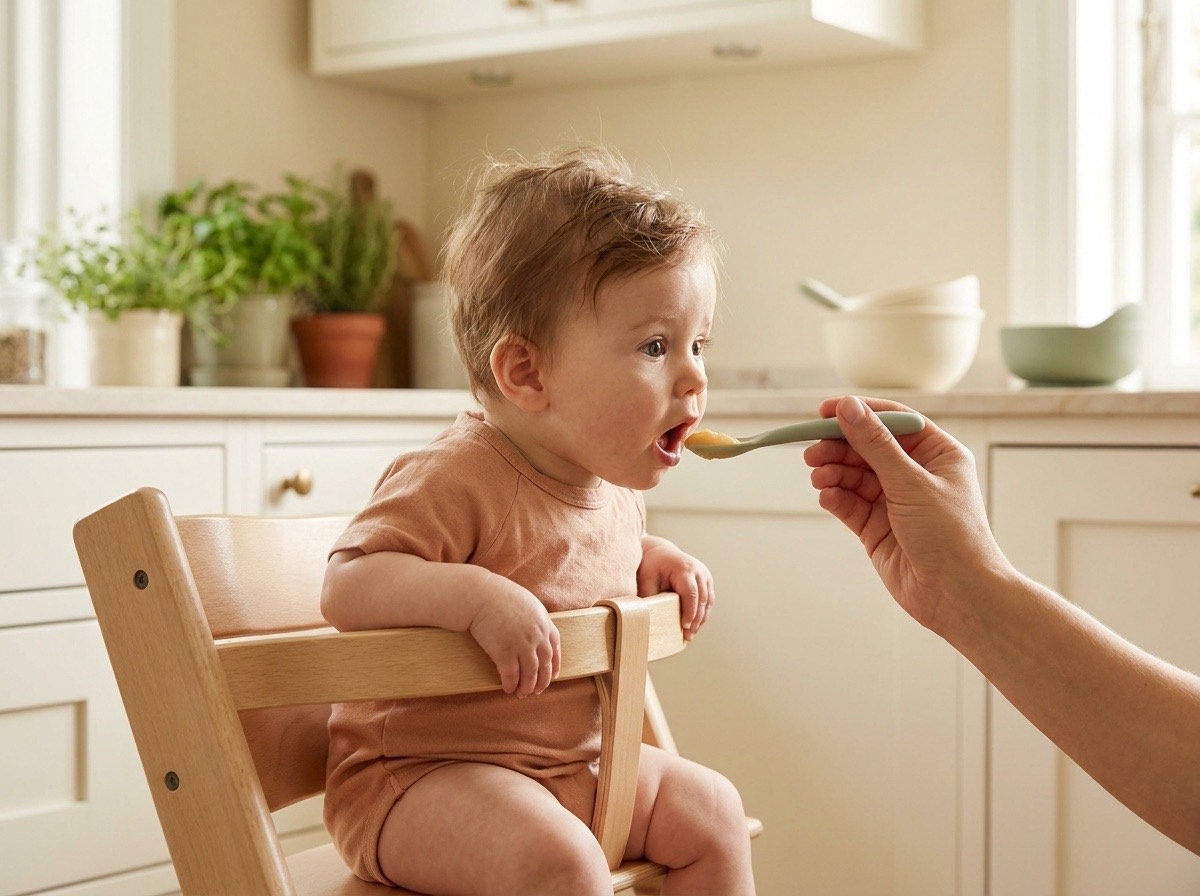
Safe Food Introduction Explained for New Parents
Discover safe food introduction explained for new parents. Learn how to gradually introduce solids to your baby, ensuring safe nutrition.

Safe food introduction is the practice of offering solid foods to infants in a gradual, deliberate sequence that supports nutrition, builds allergy tolerance, and minimizes choking risk. The American Academy of Pediatrics (AAP) and the CDC both recommend starting around 6 months, never before 4 months, using single-ingredient foods introduced one at a time. The formal term used in pediatric nutrition is “complementary feeding,” meaning solids complement breast milk or formula rather than replace them. Getting this process right matters more than most parents realize. Done well, it shapes your child’s relationship with food for years.
What is safe food introduction, and when should you start?
Readiness for solids appears around 6 months, not at a fixed date on the calendar. Your baby gives you the signals. Watch for three key signs: steady head control, the ability to sit upright with support, and the disappearance of the tongue-thrust reflex (the automatic push that sends food back out of the mouth).
Starting before 4 months carries real risk. The digestive system is not ready, and early introduction is linked to higher rates of obesity and food sensitivities. Breast milk or formula remains the primary nutrition source through the first year. Solids at this stage are about skill acquisition, not caloric replacement. Think of it as your baby learning a new language, one bite at a time.
Pro Tip: Offer solids after a partial milk feeding, not when your baby is ravenous. A slightly satisfied baby is more patient and receptive to new textures.
- Steady head control: Baby holds their head upright without wobbling
- Sits with support: Can stay upright in a high chair without slumping
- Loss of tongue-thrust reflex: Food stays in the mouth instead of being pushed out
- Shows interest in food: Reaches toward your plate or opens mouth when food approaches
The first foods should be single-ingredient purées: iron-fortified oat or barley cereal, pureed sweet potato, or mashed avocado. The CDC specifically recommends oat and barley cereals over rice cereal to reduce arsenic exposure. Wait 3–5 days between each new food. That window lets you spot any reaction clearly before adding another variable.
How do you introduce allergenic foods safely?

Pediatric guidelines no longer recommend delaying allergen introduction for allergy prevention. That advice has been reversed. Current science shows that early, repeated exposure to allergenic foods actually reduces the risk of developing a food allergy.
The nine major allergens to introduce are peanut, egg, dairy, wheat, fish, shellfish, soy, sesame, and tree nuts. Introduce them one at a time, every 2–3 days, so you can identify the source of any reaction. Here is a practical sequence to follow:
- Choose a calm morning. Offer the new allergen earlier in the day so you can monitor your baby during waking hours.
- Start small. A quarter teaspoon of thinned peanut butter or a small amount of scrambled egg is enough for the first exposure.
- Wait and watch. Observe for 2 hours for hives, vomiting, swelling, or breathing changes.
- Repeat consistently. Once tolerated, maintain exposure 2–3 times per week to build lasting tolerance.
- Consult your pediatrician first if your baby has severe eczema or a known egg allergy, as these are high-risk factors for peanut allergy.
The most common mistake parents make is introducing an allergen once and never offering it again. Regular feeding after introduction is what builds immunity. A single exposure does almost nothing on its own.
Pro Tip: Mix a small amount of peanut butter into pureed sweet potato or oatmeal. It blends easily, reduces choking risk, and makes the flavor less jarring for a new palate.
Preparation matters for safety. Thin nut butters with water or breast milk before serving. Never offer whole nuts, thick globs of nut butter, or large chunks of fish. The goal is allergen exposure without creating a choking hazard.
What foods are choking hazards, and how do you prepare safely?
Choking is a silent emergency. Unlike gagging, which is loud and protective, choking produces no sound. Gagging is a normal reflex during the learning process and does not require intervention. Choking does. Knowing the difference keeps you calm when gagging happens and alert when it matters.
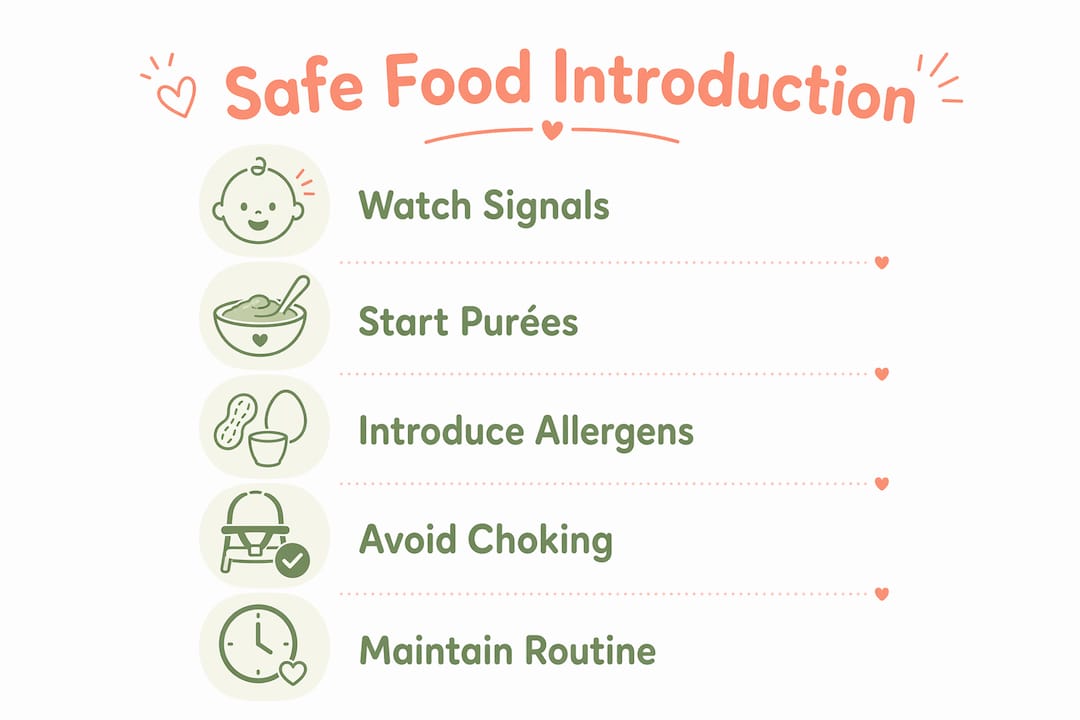
The squish test is the most practical tool for checking food safety. If you cannot easily squash the food between your thumb and forefinger, it is too firm for an infant. Apply this test to every new food before it reaches the high chair.
Foods to avoid completely before age 1
- Whole grapes, cherry tomatoes, and blueberries (cut these lengthwise into quarters, never coin-shaped slices)
- Whole nuts and seeds
- Popcorn and hard crackers
- Hot dogs and large chunks of meat
- Raw carrots and apple slices
- Thick nut butter served directly from a spoon
Safe feeding environment checklist
| Factor | Safe Practice |
|---|---|
| Seating position | Upright in a high chair, never reclined |
| Supervision | Adult present and focused, no screens |
| Food texture | Passes the squish test or dissolves easily |
| Portion size | Pea-sized pieces for finger foods |
| Mealtime atmosphere | Calm, distraction-free setting |
A distraction-free environment also supports your baby’s ability to recognize hunger and fullness cues. Screens and loud noise interrupt that self-regulation. Keep mealtimes simple and present.
Food safety basics apply even at home. The WHO’s four principles, which are clean, separate, cook, and chill, reduce foodborne illness risk in infants whose immune systems are still developing. Wash hands before preparing food, keep raw and cooked foods separate, cook proteins thoroughly, and refrigerate leftovers within two hours.
What does a realistic feeding schedule look like?
Smooth should be a ramp, not a residence. The goal is to move your baby from purées toward mashed, lumpy, and eventually finger foods over several months. Here is how that progression typically looks:
6–7 months: Single-ingredient purées, iron-fortified cereals, and small amounts of allergens introduced one at a time. Offer 1–2 tablespoons once or twice per day. Breast milk or formula remains the primary source of nutrition.
7–8 months: Mashed foods with soft lumps. Think mashed banana, soft-cooked lentils, or scrambled egg. Increase to 2–3 small meals per day. Continue rotating allergens already introduced.
9–11 months: Soft finger foods cut into small pieces. Cooked pasta, soft-cooked vegetables, small pieces of ripe fruit, and shredded chicken all work well. Three meals per day with one or two small snacks.
12 months: Most family foods, appropriately prepared. Cow’s milk can now replace formula as a beverage, though it is safe to use in cooking before the first birthday.
- Iron-rich foods to prioritize: pureed beef, lentils, fortified cereals, and mashed beans
- Nutrient-dense early options: avocado, sweet potato, butternut squash, and full-fat plain yogurt
- Foods to hold until after 12 months: honey, cow’s milk as a drink, and added salt or sugar
Track which foods your baby has tried and tolerated. A simple notebook or app works. This record becomes especially useful when communicating with a daycare provider or pediatrician.
How can daycare settings support safe solid introduction?
Childcare providers play a direct role in safe food introduction for babies in group care. Consistency between home and daycare is not optional. It is what keeps the process safe and effective.
Safe food introduction in daycare settings requires clear communication and written protocols. These practices protect every child in the room:
- Intake forms at enrollment: Document every food already introduced at home, known reactions, and allergen status before the first day
- Daily food logs: Record what was offered, how much was eaten, and any observed reactions after each meal
- No food sharing: Strictly enforce a no-sharing policy between infants, even for foods that seem harmless
- Cross-contamination prevention: Use separate utensils, wash surfaces between children, and label all food containers with the child’s name
- Allergen rotation records: Track which allergens have been introduced and maintain the 2–3 times per week exposure schedule in coordination with parents
- Staff training: All caregivers should know the difference between gagging and choking and be certified in infant CPR
The USDA’s Child and Adult Care Food Program (CACFP) provides feeding guidelines for childcare settings that align with AAP recommendations. Providers who follow CACFP standards already have a strong foundation for safe complementary feeding.
Key takeaways
Safe solid food introduction requires starting around 6 months with single-ingredient foods, introducing allergens early and repeatedly, and maintaining consistent safety practices at home and in childcare settings.
| Point | Details |
|---|---|
| Start at the right time | Begin solids around 6 months when readiness signs appear, never before 4 months. |
| Introduce allergens early | Offer the nine major allergens one at a time, starting at 4–6 months, to reduce allergy risk. |
| Repeat allergen exposure | Feed tolerated allergens 2–3 times per week to build and maintain lasting tolerance. |
| Use the squish test | If food does not squash easily between two fingers, it is too firm and poses a choking risk. |
| Coordinate with daycare | Share food logs, allergy records, and allergen schedules with childcare providers in writing. |
What i’ve learned after watching thousands of families start solids
The anxiety around starting solids is real, and I understand it. But the fear that paralyzes most parents is usually pointed in the wrong direction. They worry intensely about choking while unknowingly skipping the allergen exposures that matter most for long-term health.
Here is what I have seen consistently: parents who introduce allergens confidently and repeatedly in the first year raise children with far fewer food restrictions at age five. The science backs this up, but so does the pattern I see in practice. The families who wait, who delay peanut or egg “just to be safe,” often end up with the very allergies they were trying to avoid.
The other thing worth saying plainly: gagging is not a crisis. It looks alarming. It sounds alarming. But it is your baby’s airway doing exactly what it is supposed to do. Stay calm, stay close, and let the reflex work. Your reaction teaches your baby whether mealtimes are safe or scary.
Start simple. Stay consistent. Trust the process more than the fear.
— Jernej
Ready to take the guesswork out of starting solids?
Starting solids is one of the most exciting milestones in your baby’s first year. It can also feel like a lot to manage on your own, especially when allergens, textures, and timing all need to line up correctly.
Yummystarts was built specifically for this moment. The app gives you 392 pediatrician-approved recipes, real-time allergen tracking, and step-by-step serving instructions tailored to your baby’s exact age and feeding stage. Licensed therapists and pediatric specialists designed every protocol inside it. Over a million families have used Yummystarts to turn stressful mealtimes into confident ones. If you are ready to start solids with a clear plan behind you, Yummystarts is where to begin.
FAQ
When should i start introducing solid foods to my baby?
Most babies are ready for solids around 6 months, but not before 4 months. Look for steady head control, the ability to sit with support, and loss of the tongue-thrust reflex before starting.
Which allergens should i introduce first?
There is no required order, but peanut and egg are the most studied and highest priority. Introduce one allergen at a time, every 2–3 days, and offer each tolerated allergen 2–3 times per week going forward.
What is the squish test for baby food?
The squish test checks whether a food is soft enough for infants. Press the food between your thumb and forefinger. If it does not squash easily, it is too firm and poses a choking risk.
Is gagging the same as choking?
No. Gagging is loud and is a normal protective reflex as babies learn to manage food in their mouths. Choking is silent and requires immediate action. Stay calm during gagging and stay alert for the absence of sound.
How do i coordinate solid food introduction with my baby’s daycare?
Provide the daycare with a written record of every food your baby has tried, any reactions observed, and your current allergen schedule. Ask the provider to maintain daily food logs and follow a no-sharing policy between infants.
Recommended

This article is for general educational purposes only and is not a substitute for professional medical advice, diagnosis, or treatment. Always consult your pediatrician or a qualified healthcare provider about your baby's diet, allergies and readiness for solids.